




Our Story

Built by survivors,
for survivors.

The Digital Identity Foundation, a Delaware 501(c)(3) nonprofit organization, was founded by survivors who have lived the consequences of image-based sexual abuse, and who have spent decades building the legal, policy, and service infrastructure to reimagine an Internet that supports survivors, not their abusers.

Field of aster flowers reaching toward golden sunrise light through dramatic clouds, representing resilience and new beginnings

Why We Exist

A crisis without the infrastructure to meet it

Image-based sexual abuse affects one in five American adults. For people under 24, that number is nearly one in two. Generative AI has made fabrication cheap and easy (anyone can be a victim), and harm is spreading faster than law or service systems can keep up.

Effective detection and removal technology now exists, and new federal and state laws are being passed. But most survivors never get the chance to use any of it. They don't know their rights. They can't afford the technology. The people around them, from law enforcement to counselors to campus administrators, often don't know how to help either.

Behind every statistic is someone lying awake, wondering if the images will ever really be gone. That fear is what we exist to end.

The Digital Identity Foundation was built to change what happens next. We connect survivors to services. We equip responders with knowledge. We hold infrastructure companies accountable. And we publish the data that makes better law possible.

Digital Identity Foundation

Theory of Change

"Connecting survivors of image-based sexual abuse to the tools, support, and legal rights that can restore their dignity and their lives."

Vision: Justice, safety, and healing for every survivor of image-based sexual abuse.

Digital Identity Foundation hummingbird logo

The Problem

Abuse outpaces accountability

Image-based sexual abuse — someone's intimate images created, altered, stolen, or shared without their consent — is moving faster than any system built to stop it. Survivors are left to fight it mostly alone: expensive lawyers, unresponsive platforms, no guarantee the images ever come down. Meanwhile, the platforms and networks making money off that abuse face almost nothing. Free, trauma-informed help exists — just not enough of it, and not where it's needed most.

Our Belief

Ending this abuse takes accountability across the full stack — not just the person who did it, but every platform, network, and profiteer that let them. And survivors should help decide what that accountability looks like — not just live with whatever we hand them.

The Logic

  1. If

    Survivors get free, confidential removal and legal help — the platforms and networks profiting from their abuse get named and exposed — and lawmakers have real evidence in front of them —
  2. Then

    Survivors get their images down and their lives back. Bad actors face real consequences instead of none. The laws and platforms around them start to change.
  3. So That

    Every survivor can get to safety, justice, and healing — and having control of your own image is a right, not something only people who can afford it get to keep.

Theory of Change

Three Strategies

  1. Restore survivors' safety and dignity

    Direct Support · Aster Ellis Fund

    Free, confidential detection, removal, legal navigation, and weekly support — no cost, no exceptions.
  2. Expose who profits from abuse

    Accountability · The Complicit Index

    Investigates and names the networks, platforms, and companies that make money off this abuse.
  3. Change the systems, not just the cases

    Evidence & Policy · Research & Education

    Builds the evidence that gets laws written, platforms held accountable, and the public paying attention.

The Path

  • Short-term

    Survivors' images are removed. They access legal rights and emotional support. Abuse networks are documented.
  • Mid-term

    Survivors say they feel safe again. Named platforms and networks face real consequences. Policymakers cite DIF's evidence when they write legislation.
  • Long-term

    Full-stack accountability becomes the standard, not the exception. Fewer people get victimized in the first place. Survivors shape the field itself.

Theory of Change

The Future We're Building

A world where nobody fights this alone — and where your own image is protected like the right it is, not something you have to earn back.

Underlying Assumptions

  • Survivors lead our work

    Survivors lead our work. Their expertise is what drives how we build our programs and services.
  • Cost, stigma, and not being believed

    Cost, stigma, and not being believed are what keep survivors from the justice and healing they need and deserve. Remove those barriers and we will see more survivors getting support and less victimization in the future.
  • Going after the person who did it isn't enough

    Going after the person who did it isn't enough. The platforms and networks that let it happen have to be named too.
  • Evidence moves legislators, platforms, and the public

    Evidence moves legislators, platforms, and the public faster than asking nicely does.

Sister Organizations

Independent, and stronger together

The Digital Identity Foundation is an independent 501(c)(3) charity. We work in close partnership with Protect Privacy AI (opens in a new tab), the technology company founded by our own founder, which builds the detection and removal tools survivors need. That partnership is what lets our scholarships put real, working technology directly into survivors' hands, and it powers the research we publish. The Foundation is governed by its own board and a conflict-of-interest policy that keep our charitable mission independent and our decisions accountable to the survivors we serve.

Digital Identity FoundationProtect Privacy AI

Our mark is a hummingbird with an aster at its heart

The aster has long stood for dignity and justice, the belief that every person's worth is theirs by right and cannot be taken. We placed it where the heart belongs, because dignity is not what a survivor earns back at the end of the journey. It is what was always theirs.

The hummingbird is emblematic of survivors. They are small enough to be underestimated and fast enough to be unstoppable. They hover in stillness while their wings move faster than the eye can see, and they find sweetness in places others overlook. Their colors are not painted on. They refract through them like light through a prism, iris into jade into plum, and every one of them a dazzling reflection of their strength.

They are rising. And they are not rising alone.

Digital Identity Foundation hummingbird logo with an aster at the heart

What We Stand For

Vision, Mission & Core Values

Vision

A world free of image-based sexual abuse, where every person's dignity and digital identity are their own.

Mission

We give survivors the tools, support, and legal rights to erase their abuse, and we work to dismantle the systems that enable it.

Core Values

  • Dignity

    A person's images and story are theirs to control. We restore that control, never trade on it.

  • Trust

    Confidential, trauma-informed, and safe by design, at every point of contact.

  • Accountability

    We hold platforms to their obligations, and we hold ourselves to the same standard of transparency and independence.

  • Rigor

    Evidence-based and technically excellent. We publish what the data shows, even when it is inconvenient.

  • Hope

    We lead with restoration, not despair.

Leadership

Leadership Team

  • Headshot of Andrea Powell, smiling against a light background

    Andrea Powell

    Executive Director

    Andrea Powell is an internationally recognized policy leader, author, and advocate with more than two decades of experience fighting image-based sexual abuse and sex trafficking. She is the founder of FAIR Girls and Karana Rising, co-founder of STISA.network and NCVIC.org, and author of the two-time award-winning 2024 memoir Believe Me. Her advocacy has reached four White House administrations, the UN Human Rights Council, UN Women, and the U.S. Departments of Health and Human Services and Justice. A survivor herself, Andrea brings a trauma-informed lens to every program she leads.

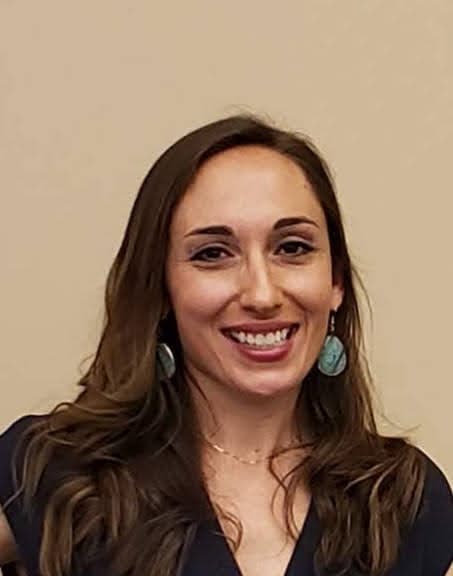
  • Headshot of Dawn Hawkins, smiling with arms crossed

    Dawn Hawkins

    Founder & Board President

    Dawn Hawkins is the founder and CEO of Protect Privacy AI, the technology company building detection, removal, and prevention infrastructure for image-based sexual abuse. She has been personally targeted by deepfake abuse, an experience that shapes her work. Before founding Protect Privacy AI, she served as Executive Director and then CEO of the National Center on Sexual Exploitation for about 14 years, where she built its law center, launched its research institute, and was a central architect of the Take It Down Act. She serves as Board President in a volunteer capacity.

  • Headshot of Melissa Sinclair, BSN, RN, smiling against a neutral background

    Melissa Sinclair, BSN, RN

    Advisor for Campus and Wellness Services

    Melissa Sinclair, BSN, RN, is a nursing educator and survivor advocate advancing trauma-informed, public-health responses to image-based sexual abuse. Her advocacy helped drive Pennsylvania House Bill 2252, which passed the state House unanimously, and she has shared her lived experience at a federal listening session on technology-facilitated abuse. At the Digital Identity Foundation, Melissa draws upon her clinical knowledge, teaching experience, legislative work, and survivor perspective to help develop practical resources and training for the professionals and institutions survivors may turn to for help.

  • Headshot of Christina Wynia, smiling against a neutral background

    Christina Wynia

    Advisor on Healing Services

    Christina Wynia is a mental health professional and survivor of technology-facilitated sexual violence who has turned her own healing journey into a career of service. She is completing a Master's degree to become a psychotherapist and is trained as a counsellor, domestic violence advocate, and yoga instructor. She works with survivor-led coalitions and global advocacy groups to support people harmed by image-based sexual abuse, and hosts peer support and meditation sessions on ShareWell. At the Digital Identity Foundation, Christina shapes trauma-informed healing services so survivors know they are not alone—and that healing is possible.

Governance

Board of Directors

  • Mariah Rief

    Survivor advocate, founder of Undox content removal service, and leading voice on California IBSA legislation.

  • Olivia Chung

    Director of Communications at the W.K. Kellogg Foundation.

  • Lisa Thompson

    Treasurer

    A decade of research and policy experience at the National Center on Sexual Exploitation.

  • Anna McAdams

    Survivor advocate whose family's experience with AI-generated deepfake abuse helped drive passage of the Take It Down Act.

Counsel

Senior Advisors

  • Ebony Tucker

    Heads Women's and Personal Safety Policy at Uber.

  • Kenya Davis

    Former federal prosecutor and Co-Chair of the D.C. Human Trafficking Task Force.

  • Matt Grady

    Former U.S. Department of Justice official.

  • Elliston Berry

    Survivor advocate whose courage at 14 helped pass the Take It Down Act. The Aster Ellis Program is named in her honor.